
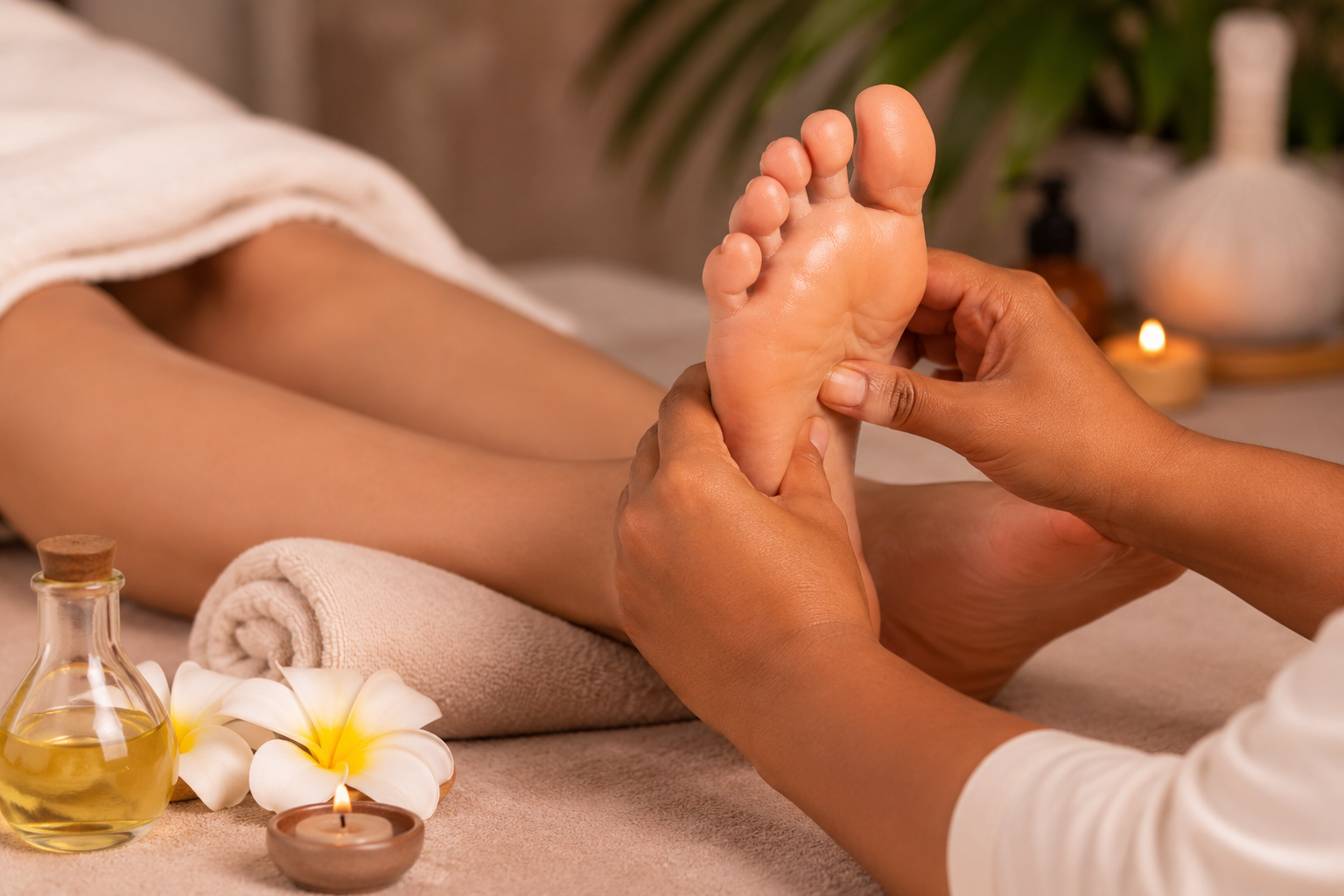
Foot massage
Place: Faridabad
Radius: 50 km
About This Service
A foot massage is a therapeutic treatment targeting the muscles, tendons, and connective tissues of the feet, ankles, and lower legs. It uses techniques like kneading, rolling, and thumb-pressing to alleviate pain, reduce tension, and promote deep relaxation.What to ExpectA standard foot massage experience often involves a few key stages:The Setup: You are seated in a comfortable recliner or lying down on a massage table.Warm-up: Sessions frequently begin with a warm foot soak or gentle compressions to prepare the muscles.Lubrication: Therapists typically apply a light massage oil, lotion, or cream to reduce friction and allow smooth gliding over the skin.Common TechniquesMassage therapists and practitioners use a variety of specific, targeted methods to work the foot:Thumb Work: Using the pads of the thumbs in small circles or linear strokes to work the arches, heels, and balls of the feet.Knuckle/Fist Work: Using a closed fist or knuckles to knead the thicker tissues on the sole of the foot.Toe Mobilization: Systematically pressing, rolling, and stretching each toe to release tension in the smaller muscles.Ankle Rotations: Supporting the foot to rotate the ankle, checking for joint mobility and smoothness.Massage vs. ReflexologyWhile they are often mentioned together, foot massages and reflexology serve slightly different purposes:Foot Massage: Primarily focused on the physical manipulation of muscles and soft tissues to relieve physical fatigue, soreness, and stress.Reflexology: A specialized technique that applies targeted pressure to specific reflex points on the feet, which are believed to correspond to different organs and systems throughout the body, aiming to restore overall balance.Primary BenefitsBecause your feet bear your body weight all day, they are prone to wear, tear, and stiffness. Regular foot massages offer several key benefits:Improves Circulation: Stimulates blood flow, helping oxygen reach tissues and reducing swelling.Relieves Stress: Triggers the release of endorphins—the body's "feel-good" hormones—instantly calming the nervous system.Eases Muscle Aches: Helps release lactic acid buildup and tension caused by standing, walking, or intense workouts.Promotes Better Sleep: Calms the nervous system, making it easier to drift off and sleep deeply.You can explore step-by-step guides for self-care on Medical News Today or read more about wellness benefits via Tattva Spa.
beauty services
- The Setup: You are seated in a comfortable recliner or lying down on a massage table.
- Warm-up: Sessions frequently begin with a warm foot soak or gentle compressions to prepare the muscles.
- Lubrication: Therapists typically apply a light massage oil, lotion, or cream to reduce friction and allow smooth gliding over the skin. [1, 2]
- Thumb Work: Using the pads of the thumbs in small circles or linear strokes to work the arches, heels, and balls of the feet.
- Knuckle/Fist Work: Using a closed fist or knuckles to knead the thicker tissues on the sole of the foot.
- Toe Mobilization: Systematically pressing, rolling, and stretching each toe to release tension in the smaller muscles.
- Ankle Rotations: Supporting the foot to rotate the ankle, checking for joint mobility and smoothness. [1, 2, 3]
- Foot Massage: Primarily focused on the physical manipulation of muscles and soft tissues to relieve physical fatigue, soreness, and stress.
- Reflexology: A specialized technique that applies targeted pressure to specific reflex points on the feet, which are believed to correspond to different organs and systems throughout the body, aiming to restore overall balance. [1, 2, 3, 4, 5]
- Improves Circulation: Stimulates blood flow, helping oxygen reach tissues and reducing swelling.
- Relieves Stress: Triggers the release of endorphins—the body's "feel-good" hormones—instantly calming the nervous system.
- Eases Muscle Aches: Helps release lactic acid buildup and tension caused by standing, walking, or intense workouts.
- Promotes Better Sleep: Calms the nervous system, making it easier to drift off and sleep deeply. [1, 2]
Foot massage
- The Setup: You are seated in a comfortable recliner or lying down on a massage table.
- Warm-up: Sessions frequently begin with a warm foot soak or gentle compressions to prepare the muscles.
- Lubrication: Therapists typically apply a light massage oil, lotion, or cream to reduce friction and allow smooth gliding over the skin. [1, 2]
- Thumb Work: Using the pads of the thumbs in small circles or linear strokes to work the arches, heels, and balls of the feet.
- Knuckle/Fist Work: Using a closed fist or knuckles to knead the thicker tissues on the sole of the foot.
- Toe Mobilization: Systematically pressing, rolling, and stretching each toe to release tension in the smaller muscles.
- Ankle Rotations: Supporting the foot to rotate the ankle, checking for joint mobility and smoothness. [1, 2, 3]
- Foot Massage: Primarily focused on the physical manipulation of muscles and soft tissues to relieve physical fatigue, soreness, and stress.
- Reflexology: A specialized technique that applies targeted pressure to specific reflex points on the feet, which are believed to correspond to different organs and systems throughout the body, aiming to restore overall balance. [1, 2, 3, 4, 5]
- Improves Circulation: Stimulates blood flow, helping oxygen reach tissues and reducing swelling.
- Relieves Stress: Triggers the release of endorphins—the body's "feel-good" hormones—instantly calming the nervous system.
- Eases Muscle Aches: Helps release lactic acid buildup and tension caused by standing, walking, or intense workouts.
- Promotes Better Sleep: Calms the nervous system, making it easier to drift off and sleep deeply. [1, 2]